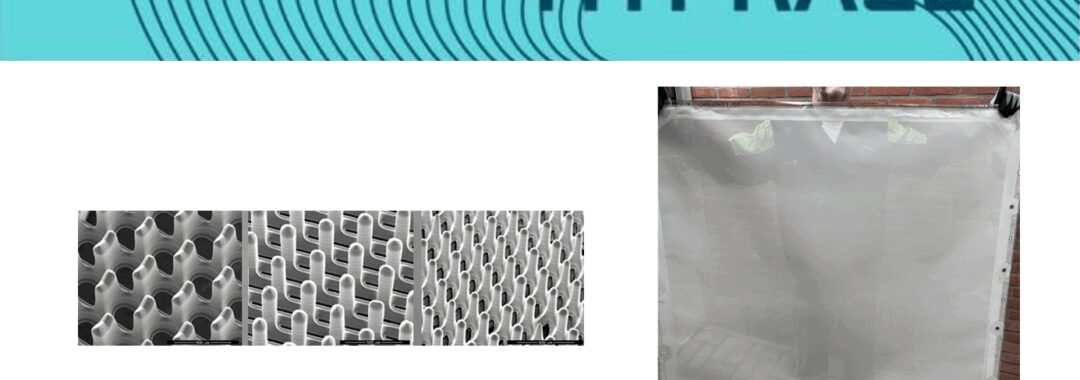
3D structured electrode for alkaline electrolysis developed by Veco

3D Electrodes for Green Hydrogen: Veco Revolutionizes Alkaline Electrolysis

New electroforming technology reduces costs and increases efficiency in green hydrogen production | Renewable energy innovation

Veco together with Fraunhofer have developed 3D structured electrodes that promise to transform the green hydrogen industry through high-efficiency water electrolysis, a key technology for energy decarbonization in Spain and Europe.

High-efficiency electrodes: The key to competitive green hydrogen

Veco’s new electrodes for alkaline electrolyzers incorporate 3D electroforming technology that significantly improves the performance of HER (hydrogen evolution reaction) and OER (oxygen evolution reaction), fundamental processes in renewable hydrogen production.

Electroforming technology: plug & play solution

Electroforming technology allows customization of:

  • Electrode thickness
  • Specific geometries and structures
  • Shape adapted to each cell design

This customization eliminates post-treatment stages, reduces assembly costs, and facilitates direct integration into industrial electrolysis systems.

CFD simulation: Digital optimization for clean energy

The development employed CFD simulation (computational fluid dynamics) to design the optimal structure that maximizes:

  • Efficient gas bubble release
  • Optimized electrolyte flow
  • Enhanced electrocatalytic activity

Validated performance: Results in alkaline electrolyzers

Tests with alkaline electrolyzers (30% KOH, 40°C, Zirfon membrane) demonstrated that NiE3 electrodes significantly outperform traditional expanded nickel meshes:

Notable reduction in cell potential
Higher efficiency at high current densities
Ideal for high-performance systems

Applications in energy transition

This innovation positions high-performance electrolyzers as a viable solution for:

  • Industrial green hydrogen production
  • Renewable energy storage
  • Transport and industry decarbonization
  • Compliance with European Net Zero targets

Impact on the renewable hydrogen market

With Spain positioning itself as a European green hydrogen hub, these technological improvements in alkaline electrolysis reduce the CAPEX and OPEX of electrolyzers, bringing renewable hydrogen closer to competitiveness against fossil fuels.

The combination of increased electrocatalytic activity and improved bubble release positions this technology as a promising breakthrough for making hydrogen production through electrolysis more efficient and economical.


The HYPRAEL project has received funding from the Clean Hydrogen Partnership under Grant Agreement No 101101452. This Partnership receives support from the European Union’s Horizon Europe Research and Innovation program, Hydrogen Europe and Hydrogen Europe Research.



hyprael-aims-to-reduce-energy-consumption-in-h2-production

HYPRAEL analysis: does Berkeley’s AEM breakthrough threaten or validate alkaline electrolysis (AEL) leadership?

Experts at HYPRAEL evaluate the impact of UC Berkeley’s new AEM electrolyzer design on durability and cost. Discover why AEL technology remains the most viable and scalable choice for industrial green hydrogen production.

The global clean energy community is buzzing about the recent announcement from UC Berkeley regarding a significant milestone in Anion Exchange Membrane (AEM) electrolyzer technology. The research claims to have mitigated the crucial issue of polymer degradation, potentially lowering manufacturing costs dramatically. This development, while impressive, requires careful strategic context. As specialists in Alkaline Electrolysis (AEL), HYPRAEL recognizes the importance of the research, yet we must underscore the proven maturity of AEL. This article details the key differences, the strategic market response, and why AEL continues to hold the industrial advantage in longevity, tested efficiency, and current scale. Read on for our detailed technological comparison.

AEM’s theoretical cost vs. AEL’s industrial reality

While the cost reduction potential of AEM is appealing, the technology must now transition from lab success to multi-megawatt industrial reliability—a threshold AEL has surpassed for decades. AEL, by utilizing robust and inexpensive liquid electrolytes, avoids the high material costs associated with some membrane systems, making its operational expenditure (OPEX) highly competitive over the long term. This operational stability, essential for continuous industrial output, is the critical advantage AEM must still prove.

Why longevity and efficiency drive HYPRAEL’s AEL strategy

The key metric for industrial-scale deployment is the total cost of ownership (TCO). The long lifespan and established recycling processes of AEL components contribute significantly to its lower TCO. HYPRAEL remains focused on refining AEL’s efficiency curve and further reducing its capital expenditure (CAPEX) to maintain our edge. The Berkeley study, by tackling durability, highlights the fundamental engineering trade-offs inherent in all electrolysis methods.

The hydrogen future: a strong market built on strong competition

HYPRAEL views the progress in AEM as beneficial for the entire green hydrogen sector. Increased competition fosters innovation and validates the global commitment to electrifying fuel production. Our message is clear: the technology is mature, the investment is urgent, and Alkaline Electrolysis (AEL) is the reliable choice for today’s large-scale projects.

Contact HYPRAEL today to discuss how AEL can power your next industrial descarbonization project.