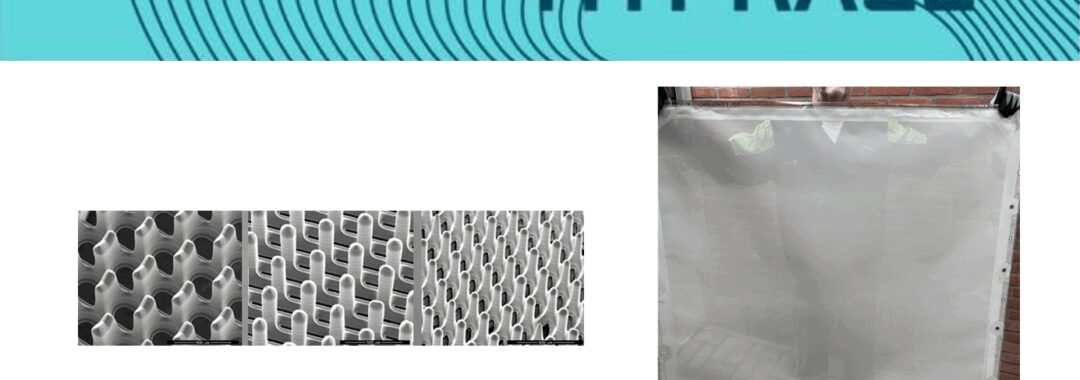
3D structured electrode for alkaline electrolysis developed by Veco

3D Electrodes for Green Hydrogen: Veco Revolutionizes Alkaline Electrolysis

New electroforming technology reduces costs and increases efficiency in green hydrogen production | Renewable energy innovation

Veco together with Fraunhofer have developed 3D structured electrodes that promise to transform the green hydrogen industry through high-efficiency water electrolysis, a key technology for energy decarbonization in Spain and Europe.

High-efficiency electrodes: The key to competitive green hydrogen

Veco’s new electrodes for alkaline electrolyzers incorporate 3D electroforming technology that significantly improves the performance of HER (hydrogen evolution reaction) and OER (oxygen evolution reaction), fundamental processes in renewable hydrogen production.

Electroforming technology: plug & play solution

Electroforming technology allows customization of:

  • Electrode thickness
  • Specific geometries and structures
  • Shape adapted to each cell design

This customization eliminates post-treatment stages, reduces assembly costs, and facilitates direct integration into industrial electrolysis systems.

CFD simulation: Digital optimization for clean energy

The development employed CFD simulation (computational fluid dynamics) to design the optimal structure that maximizes:

  • Efficient gas bubble release
  • Optimized electrolyte flow
  • Enhanced electrocatalytic activity

Validated performance: Results in alkaline electrolyzers

Tests with alkaline electrolyzers (30% KOH, 40°C, Zirfon membrane) demonstrated that NiE3 electrodes significantly outperform traditional expanded nickel meshes:

Notable reduction in cell potential
Higher efficiency at high current densities
Ideal for high-performance systems

Applications in energy transition

This innovation positions high-performance electrolyzers as a viable solution for:

  • Industrial green hydrogen production
  • Renewable energy storage
  • Transport and industry decarbonization
  • Compliance with European Net Zero targets

Impact on the renewable hydrogen market

With Spain positioning itself as a European green hydrogen hub, these technological improvements in alkaline electrolysis reduce the CAPEX and OPEX of electrolyzers, bringing renewable hydrogen closer to competitiveness against fossil fuels.

The combination of increased electrocatalytic activity and improved bubble release positions this technology as a promising breakthrough for making hydrogen production through electrolysis more efficient and economical.


The HYPRAEL project has received funding from the Clean Hydrogen Partnership under Grant Agreement No 101101452. This Partnership receives support from the European Union’s Horizon Europe Research and Innovation program, Hydrogen Europe and Hydrogen Europe Research.
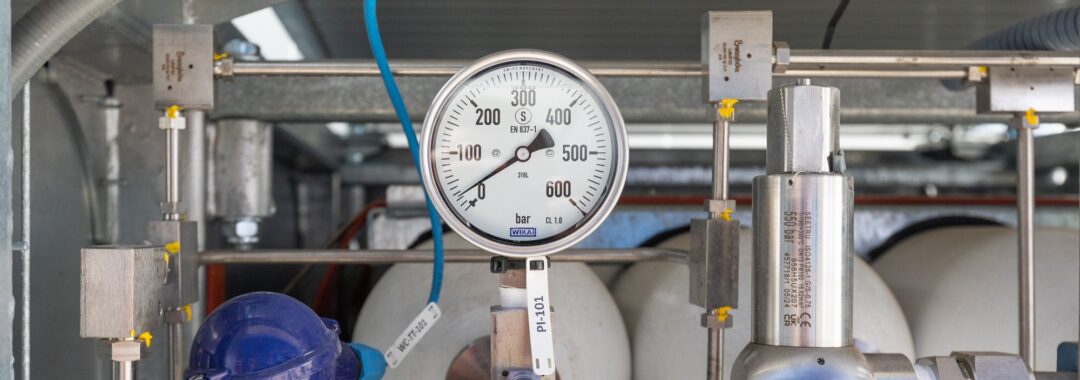



Alkaline electrolysis: 8% of european publications confirms its technological dominance

HYPRAEL, a leader in alkaline electrolysis (AEL) solutions for green hydrogen production, welcomes the publication of The Hydrogen Education and Research Landscape report (October 2025). The report highlights the relevance and growing attention the European scientific community is dedicating to alkaline technology.

The analysis, which tracks publications and patents across Europe (EU27, EFTA, and UK) from 2006 to 2025, reveals that alkaline electrolysis accounts for 8% of the total publications identified in the fields of clean hydrogen production, storage, and fuel cells.

The focus shifts to production

This data point is critical, as the study notes a “growing emphasis on publications and patents related to hydrogen production.”

AEL, being the most mature, proven production technology with lower manufacturing costs (as it does not require precious metals as catalysts), is positioned as the most robust and cost-effective solution to meet the increasing demand for green hydrogen at industrial scale.

The report also highlights the presence of alkaline technology in the fuel cell sector, where it accounts for 5% of publications.

HYPRAEL invites media and industry stakeholders to review the full report and visit its website to explore how its state-of-the-art alkaline electrolysers are optimising efficiency and lowering the cost of green hydrogen.

hyprael-green-hydrogen-electrolyzer-at-80-bar

HYPRAEL: the project that wants hydrogen to breathe pressurized?

In European laboratories, driving high pressure green hydrogen production, where steel pipes intertwine like arteries and steam sketches invisible maps in the air, teams of engineers are driven by a shared obsession: to free hydrogen — as much as possible — from its dependence on mechanical compressors. Learn more about the project’s foundations on the  .

This isn’t science fiction. It’s HYPRAEL, a project that sounds futuristic but is being built, quite literally, with hands in the present. Its goal is as bold as it is concrete: to produce green hydrogen directly at pressures beyond today’s state of the art, drastically reducing the need for mechanical compression afterward.

When the challenge is invisible, but heavy: compression

Today, producing hydrogen isn’t the main issue. The real challenge comes next. To store or transport it, it must be compressed. And that costs energy, money, and time. HYPRAEL aims to skip that step — or at least, make it much smaller.

The alkaline alchemy

The chosen technology isn’t new, but the ambition behind it is. Alkaline electrolysis has been used for decades, but it has never been pushed this far: to operate above 30 bar, to explore its limits and aim for 50 or even 80 bar of pressure, while also improving efficiency at higher temperatures — with advanced, sustainable materials and minimal loss in performance. It’s like asking a bicycle to compete with a bullet train… and win. Discover the full scope of the initiative through its listing on .

But the researchers aren’t intimidated. They’re redesigning cells, testing new electrodes and separators, and fine-tuning each parameter like a symphony. Because they know that if this works, it could change the rules of the game.

Beyond the lab

HYPRAEL doesn’t stop at academic papers. It’s grounded and focused on the industry. The project will validate prototypes under real-world conditions, measure environmental and economic impact, and work toward a future where Europe not only consumes green hydrogen — but produces it with homegrown technology. Read how the is coordinating this European effort. View the project details on the .

A European effort, built together HYPRAEL is not a solo endeavor — it’s powered by a consortium of leading institutions and companies across Europe. Coordinated by the Aragon Hydrogen Foundation, the project brings together key players such as Fraunhofer, Green Hydrogen System, AGFA, VECO, and Syensqo. Each partner contributes its expertise: from advanced materials and cell design to industrial validation and process engineering. This collective effort ensures that HYPRAEL’s innovations are not only technically sound, but scalable, sustainable, and aligned with Europe’s vision for clean hydrogen production.